Giáo dục mở - tài nguyên giáo dục mở
Ứng dụng và phát triển
REFERENCES
TÀI LIỆU THAM KHẢO
Abendroth-Dias, K., Arias-Cabarcos, P., Bacco, F.M., Bassani, E., Bertoletti, A., et al. (authors); Navajas-Cawood, E., Vespe, M., Kotzev, A. and Van Bavel, R. (editors) (2025). Generative AI Outlook Report - Exploring the Intersection of Technology, Society and Policy. Luxembourg: Publications Office of the European Union. https://publications.jrc.ec.europa.eu/repository/handle/JRC142598
Anderson, L. W., & Krathwohl, D. R., with Airasian, P. W., Cruikshank, K. A., Mayer, R. E., Pintrich, P. R., Raths, J., & Wittrock, M. C. (Eds.). (2001). A taxonomy for learning, teaching, and assessing: A revision of Bloom’s taxonomy of educational objectives. Abridged Version. London: Pearson. ISBN-13: 9780321084057.
Boerkamp, L. G. P., van Deursen, A. J. A. M., Laar, E. van, van der Zeeuw, A., & van der Graaf, S. (2024). Exploring Barriers to and Outcomes of Internet Appropriation Among Households Living in Poverty: A Systematic Literature Review. Sage Open, 14(1). https://doi.org/10.1177/21582440241233047
Brundle, C., Johansson, J. F., Best, K., Clegg, A., Forster, A., Atkinson, T., Foster, M., Humphrey, S., Iliff, A., Inglis, J., Walker, C., & Graham, L. (2025). Development of methods to identify digitally excluded older people, and tailoring of interventions to meet their digital needs: a protocol for a mixed-methods study (the INCLUDE study). BMJ open, 15(9), e102723. https://doi.org/10.1136/bmjopen-2025-102723
Carretero Gomez, S., Vuorikari, R. and Punie, Y (2017). DigComp 2.1: The Digital Competence Framework for Citizens with eight proficiency levels and examples of use. Luxembourg: Publications Office of the European Union. https://publications.jrc.ec.europa.eu/repository/handle/JRC106281
Castañeda, L., Viñoles-Cosentino, V., Postigo-Fuentes, A.Y., Herrero, C., & Cachia, R. (2023). Strategic Approaches to Regional Transformation of Digital Education. Luxembourg: Publications Office of the European Union. https://publications.jrc.ec.europa.eu/repository/handle/JRC134282
Cedefop (2014). Terminology of European education and training policy: Second edition. Luxembourg: Publications Office of the European Union. https://www.cedefop.europa.eu/en/publications/4117
Cedefop (2017). Defining, writing and applying learning outcomes: A European Handbook. Luxembourg: Publications Office of the European Union. https://www.cedefop.europa.eu/en/publications/4156
Cedefop (2021). Review and renewal of qualifications: Towards methodologies for analysing and comparing learning outcomes. Luxembourg: Publications Office of the European Union. https://data.europa.eu/doi/10.2801/615021
Cedefop (2022). Defining, writing and applying learning outcomes: A European Handbook – Second Edition. Luxembourg: Publications Office of the European Union. https://www.cedefop.europa.eu/en/publications/4209
Cedefop (2024a). Learning outcomes going global: A multifaceted phenomenon. Luxembourg: Publications Office of the European Union. https://www.cedefop.europa.eu/en/publications/9193
Ceefop (2024b). The shift to learning outcomes: Rhetoric or reality? Online workshop, May 23, 2024. https://www.cedefop.europa.eu/en/events/shift-learning-outcomes-rhetoric-or-reality
Cedefop (2024c). Learning outcomes resources: Dataset. https://data.europa.eu/data/datasets/learning-outcomes-resources?locale=en
Centeno, C., & Cosgrove, J. (2025). Ten Years of DigComp: A Framework more essential than ever. Luxembourg: Publications Office of the European Union. https://publications.jrc.ec.europa.eu/repository/handle/JRC143430
Centeno, C., Cosgrove, J., Cachia, R., Mora, T., Di Legge, A., Vivarelli, S., Bulian, G., Moyes-Prellezo, N., Piña de Santisteban, P, Schulz, C., Hüsing, T., Cuartas-Acosta, A., & Troia, S. (2024a). European Digital Skills Certificate (EDSC) Feasibility Study, Luxembourg: Publications Office of the European Union. https://publications.jrc.ec.europa.eu/repository/handle/JRC138344
Centeno, C., Cosgrove, J., Cachia, R., Mora, T., Di Legge, A., Vivarelli, S., Bulian, G., Moyes-Prellezo, N., Piña de Santisteban, P, Schulz, C., Hüsing, T., Cuartas-Acosta, A., & Troia, S. (2024b). European Digital Skills Certificate (EDSC) Feasibility Study: Annexes to the Repoort, Luxembourg: Publications Office of the European Union. https://publications.jrc.ec.europa.eu/repository/handle/JRC138344
Chen, O., Paas, F. & Sweller, J. (2023). A Cognitive Load Theory Approach to Defining and Measuring Task Complexity Through Element Interactivity. Educ Psychol Rev 35, 63. https://doi.org/10.1007/s10648-023-09782-w
Clifford, I., Kluzer, S., Troia, S., Jakobsone, M. and Zandbergs, U. (authors); Vuorikari, R., Punie, Y., Castaño Muñoz, J., Centeno Mediavilla, I.C., O’Keeffe, W. and Cabrera Giraldez, M. (editors) (2020). DigCompSAT: A Self-reflection Tool for the European Digital Competence Framework for Citizens. Luxembourg: Publications Office of the European Union. https://publications.jrc.ec.europa.eu/repository/handle/JRC123226
Colantoni, A., Garmendia, A., Berardinelli, L., Wimer, M., & Bräuer, J. (2021). Leveraging Model-Driven Technologies for JSON Artefacts: The Shipyard Case Study. ACM/IEEE 24th International Conference on Model Driven Engineering Languages and Systems (MODELS), Fukuoka, Japan, pp. 250-260, doi: 10.1109/MODELS50736.2021.00033
Council of the EU (2017). Outcome of proceedings: Council Recommendation on the European Qualifications Framework for lifelong learning and repealing the Recommendation of the European Parliament and of the Council of 23 April 2008 on the establishment of the European Qualifications Framework for lifelong learning. Brussels: Council of the EU. https://data.consilium.europa.eu/doc/document/ST-9620-2017-INIT/en/pdf
Digital Austria (2024). Austrian Framework of Reference for Digital Competence: Visibility, comparability and guidance. Vienna: Federal Chancellery of Austria. https://www.digitalekompetenzen.gv.at/dam/jcr:af4d61bc-163e-4639-b2a7-91184abc5193/2024_Austrian%20Framework%20of%20Reference%20for%20Digital%20Competence.pdf
Di Vinadio, T.B., van Noordt, C., Vargas Alvarez del Castillo, C., & Avila, R. (2022). Artificial intelligence and digital transformation: Competences for civil servants (Working Group report on AI capacity building). Paris: UNESCO. https://unesdoc.unesco.org/ark:/48223/pf0000383325
Draghi, M. (2024). The Future of European Competitiveness: A Competitiveness Strategy for Europe. Brussels: European Commission. https://commission.europa.eu/document/97e481fd-2dc3-412d-be4c-f152a8232961_en
Duckworth, D., & Fraillon, J. (2025). Computational thinking framework. In J. Fraillon & M. Rožman (editors), IEA International Computer and Information Literacy Study 2023: Assessment Framework (pp. 35-43). Amsterdam: IEA. https://link.springer.com/book/10.1007/978-3-031-61194-0
EQF-Europass project group. (2024). European guidelines for the development and writing of short, learning-outcomes-based descriptions of qualifications. Cedefop working paper series, 21. Luxembourg: Publications Office of the European Union. http://data.europa.eu/doi/10.2801/838553
European Commission (2012). Charter of Fundamental Rights of the European Union. Brussels: European Commission. https://eur-lex.europa.eu/eli/treaty/char_2012/oj/eng
European Commission (2018). Council Recommendation of 22 May 2018 on key competences for lifelong learning. Brussels: European Commission. https://eur-lex.europa.eu/legal-content/EN/TXT/?uri=uriserv:OJ.C_.2018.189.01.0001.01.ENG&toc=OJ:C:2018:189:TOC
European Commission (2020). Communication on the Digital Education Action Plan 2021-2027: Resetting education and training for the digital age. Brussels: European Commission. https://eur-lex.europa.eu/legal-content/EN/TXT/?uri=CELEX%3A52020DC0624
European Commission (2021). European Pillar of Social Rights Action Plan. Brussels: European Commission. https://op.europa.eu/webpub/empl/european-pillar-of-social-rights/en/
European Commission (2022). Linking data: What does it mean? (web page) https://data.europa.eu/en/publications/datastories/linking-data-what-does-it-mean
European Commission (2023a). European Declaration on Digital Rights and Principles for the Digital Decade. Brussels: European Commission. https://eur-lex.europa.eu/legal-content/EN/TXT/?uri=OJ:JOC_2023_023_R_0001
European Commission (2023b). Commission Staff Working Document accompanying the documents Proposal for a Council Recommendation on the key enabling factors for successful digital education and training Proposal for a Council Recommendation on improving the provision of digital skills in education and training (SWD/2023/205 final). Brussels: European Commission. https://eur-lex.europa.eu/legal-content/EN/TXT/?uri=CELEX:52023SC0205
European Commission (2023c). Guide to EU citizenship. Luxembourg: Publications Office of the European Union. https://commission.europa.eu/publications/guide-eu-citizenship_en
European Commission (2025a). State of the Digital Decade 2025: Keep building the EU’s sovereignty and digital future (main report). Brussels: European Commission. https://digital-strategy.ec.europa.eu/en/library/state-digital-decade-2025-report
European Commission (2025b). Communication on the Union of Skills. Brussels: European Commission. https://eur-lex.europa.eu/legal-content/EN/TXT/PDF/?uri=CELEX%3A52025DC0090
European Commission (2025c). Communication on the Action Plan on Basic Skills. Brussels: European Commission. https://education.ec.europa.eu/sites/default/files/2025-03/Graphic%20version%20Action%20Plan%20on%20Basic%20Skills.pdf
European Commission (2025d). Communication on a STEM education strategic plan: Skills for competitiveness and innovation. Brussels: European Commission. https://education.ec.europa.eu/sites/default/files/2025-03/STEM_Education_Strategic_Plan_COM_2025_89_1_EN_0.pdf
European Commission (2025e). Monitoring of the European Declaration on Digital Rights and Principles. Brussels: European Commission. https://digital-strategy.ec.europa.eu/en/library/digital-decade-2025-declaration-digital-rights-and-principles-monitoring-report-2025
European Commission (2025f). Communication: Guidelines on the definition of an artificial intelligence system established by Regulation (EU) 2024/1689 (AI Act). Brussels: European Commission. https://digital-strategy.ec.europa.eu/en/library/commission-publishes-guidelines-ai-system-definition-facilitate-first-ai-acts-rules-application
European Parliament (2024). Regulation (EU) 2024/1689 of the European Parliament and of the Council of 13 June 2024 laying down harmonised rules on artificial intelligence and amending Regulations (EC) No 300/2008, (EU) No 167/2013, (EU) No 168/2013, (EU) 2018/858, (EU) 2018/1139 and (EU) 2019/2144 and Directives 2014/90/EU, (EU) 2016/797 and (EU) 2020/1828 (Artificial Intelligence Act). Brussels: Official Journal of the European Union. https://eur-lex.europa.eu/legal-content/EN/TXT/?uri=CELEX:32024R1689
Eurostat (2025). Statistics explained: ICT specialists in employment. (web page) https://ec.europa.eu/eurostat/statistics-explained/index.php?oldid=675865).
Farias-Gaytan, S., Aguaded, I., & Ramirez-Montoya, M. (2023). Digital transformation and digital literacy in the context of complexity within higher education institutions: a systematic literature review. Humanities and Social Sciences Communications, 10(1). https://doi.org/10.1057/s41599-023-01875-9
Ferrari, A., with Punie, Y. and Brecko, B., editors. (2013). DIGCOMP: A Framework for Developing and Understanding Digital Competence in Europe. EUR 26035, Luxembourg: Publications Office of the European Union. https://publications.jrc.ec.europa.eu/repository/handle/JRC83167
González-Mujico, F. (2024). Measuring student and educator digital competence beyond self-assessment: Developing and validating two rubric-based frameworks. Educ Inf Technol 29, 13299–13324. https://doi.org/10.1007/s10639-023-12363-7
Gonzalez-Vazquez, I., Fernandez-Macias, E., Wright, S., & Villani, D. (2025). Digital Monitoring, Algorithmic Management and the Platformisation of Work in Europe. Luxembourg: Publications Office of the European Union. https://publications.jrc.ec.europa.eu/repository/handle/JRC143072
Helm, P., Bella, G., Koch, G., & Giunchiglia, F. (2024). Diversity and language technology: How language modelling bias causes epistemic injustice. Ethics and Information Technology, 26 (8). https://doi.org/10.1007/s10676-023-09742-6
Kluzer, S., Centeno, C. and O’Keeffe, W. (2020). DigComp at Work. Luxembourg: Publications Office of the European Union. https://publications.jrc.ec.europa.eu/repository/handle/JRC120376
International Test Commission and Association of Test Publishers (2022). Guidelines for technology-based assessment (version 1.1). Hempstead: International Test Commission and Pennsylvania: Association of Test Publishers. https://www.testpublishers.org/assets/Guidelines%20for%20Technology-Based%20Assessment%20v2022.11.08.pdf
Irvine, J. (2021). Taxonomies in Education: Overview, Comparison, and Future Directions. Journal of Education and Development, 5(2). https://doi.org/10.20849/jed.v5i2.898
ITU (2022). Achieving universal and meaningful connectivity: Setting a baseline and targets for 2030. Geneva: ITU. https://www.itu.int/itu-d/meetings/statistics/wp-content/uploads/sites/8/2022/04/UniversalMeaningfulDigitalConnectivityTargets2030_BackgroundPaper.pdf
Lewandowsky, S., Smillie, L., Garcia, D., Hertwig, R., Weatherall, J., Egidy, S., Robertson, R.E., O’Connor, C., Kozyreva, A., Lorenz-Spreen, P., Blaschke, Y., & Leiser, M. (2020). Technology and democracy: Understanding the influence of online technologies on political behaviour and decision-making, Luxembourg: Publications Office of the European Union. https://publications.jrc.ec.europa.eu/repository/handle/JRC122023
Li, F., Wang, X., He, X., Cheng, L., & Wang, Y. (2022). The effectiveness of unplugged activities and programming exercises in computational thinking education: A Meta-analysis. Education and Information Technologies, 27(6), 7993–8013. https://doi.org/10.1007/s10639-022-10915-x
Long, D., & Magerko, B. (2020). What is AI literacy? Competences and design considerations. In CHI 2020 - Proceedings of the 2020 CHI Conference on Human Factors in Computing Systems Article 3376727 (Conference on Human Factors in Computing Systems - Proceedings). Association for Computing Machinery. https://doi.org/10.1145/3313831.3376727
Miao, F., Shiohira, K., & Lao, N. (2024). AI competency framework for students. Paris: UNESCO. https://unesdoc.unesco.org/ark:/48223/pf0000391105
Mills, K., Ruiz, P., Lee, K., Coenraad, M., Fusco, J., Roschelle, J. & Weisgrau, J. (2024). AI Literacy: A Framework to Understand, Evaluate, and Use Emerging Technology. Washington: Digital Promise. https://digitalpromise.dspacedirect.org/items/6d15adcd-5a84-47fa-b6d0-1310154eee02
Morris, T. H. (2023). Four Dimensions of Self-Directed Learning: A Fundamental Meta-Competence in a Changing World. Adult Education Quarterly, 74(3), 236-254. https://doi.org/10.1177/07417136231217453
Morte-Nadal, T., Esteban-Navarro, M.Á. (2025). Recommendations for digital inclusion in the use of European digital public services. Humanit Soc Sci Commun, 12, 273. https://doi.org/10.1057/s41599-025-04576-7
Nárosy, T., Schmölz, A., Proinger, J., & Domany-Funtan, U. (2022): Digitales Kompetenzmodell für Österreich. DigComp 2.3 AT. Medienimpulse, 60(4). www.doi.org/10.21243/mi-04-22-23 (EN: https://f4i.hbox.at/index.php/s/4gN4p3j3Bb33GyH)
Ng, D.T., Leung, J.K., Chu, S.K., & Qiao, M.S. (2021). Conceptualizing AI literacy: An exploratory review. Computers and Education: Artificial Intelligence, 2. https://www.sciencedirect.com/science/article/pii/S2666920X21000357
OECD (2025). Empowering learners for the age of AI: An AI literacy framework for primary and secondary education (review draft). Paris: OECD Publishing. https://ailiteracyframework.org/wp-content/uploads/2025/05/AILitFramework_ReviewDraft.pdf
Onesi-Ozigagun, N. O., Ololade, N. Y. J., Eyo-Udo, N. N. L., & Ogundipe, N. D. O. (2024). Revolutionizing education through AI: A comprehensive review of enhancing learning experiences. International Journal of Applied Research in Social Sciences, 6(4), 589–607. https://doi.org/10.51594/ijarss.v6i4.1011
Pakhnenko, O., Yarovenko, H., Semenog, A., Mordan, Y., & Tarasenko, O. (2025). Uncovering patterns of digital transformation of European economies using self-organising maps. Problems and Perspectives in Management, 23(3), 581-596. http://dx.doi.org/10.21511/ppm.23(3).2025.42
Pouliakas, K., Santangelo, G. & Dupire, P. (2025). Are artificial intelligence skills a reward or a gamble? Deconstructing the AI wage premium in Europe. Eurasian Bus Rev. https://doi.org/10.1007/s40821-025-00302-0
Rehm, G., & Way, A. (2023). European language equality: A strategic agenda for digital language equality. Springer International Publishing. https://library.oapen.org/handle/20.500.12657/63568
Stalmach, A., D’Elia, P., Di Sano, S., & Casale, G. (2023). Digital Learning and Self-Regulation in Students with Special Educational Needs: A Systematic Review of Current Research and Future Directions. Education Sciences, 13(10), 1051. https://doi.org/10.3390/educsci13101051
Țarcă, V., Luca, F.-A., & Țarcă, E. (2024). The Digital Edge: Skills That Matter in the European Labour Market after COVID-19. Economies, 12(10), 273. https://doi.org/10.3390/economies12100273
Touretzky, D., Gardner-McCune, C., Martin, F., & Seehorn, D. (2019). Envisioning AI for K-12: What Should Every Child Know about AI? Proceedings of the AAAI Conference on Artificial Intelligence, 33(01), 9795-9799. https://doi.org/10.1609/aaai.v33i01.33019795
Touretzky, D., Gardner-McCune, C. & Seehorn, D. (2023). Machine Learning and the Five Big Ideas. In AI. Int J Artif Intell Educ 33, 233–266. https://doi.org/10.1007/s40593-022-00314-1
Tzafilkou, K., Perifanou, M. & Economides, A.A. (2022). Development and validation of students’ digital competence scale (SDiCoS). Int J Educ Technol High Educ 19, 30. https://doi.org/10.1186/s41239-022-00330-0
UN (2024). Communication on the Global Digital Compact (GDC). Geneva: UN. https://www.un.org/global-digital-compact/sites/default/files/2024-09/Global%20Digital%20Compact%20-%20English_0.pdf
UNESCO (2022). K-12 AI curricula: A mapping of government-endorsed AI curricula. Paris: UNESCO. https://unesdoc.unesco.org/ark:/48223/pf0000380602
Vuorikari R, Punie Y, Carretero Gomez, S. and Van Den Brande, G. (2016). DigComp 2.0: The Digital Competence Framework for Citizens. Update Phase 1: the Conceptual Reference Model. Luxembourg: Publications Office of the European Union. https://publications.jrc.ec.europa.eu/repository/handle/JRC101254
Vuorikari, R., Kluzer, S. and Punie, Y., (2022a). DigComp 2.2: The Digital Competence Framework for Citizens - With new examples of knowledge, skills and attitudes. Luxembourg: Publications Office of the European Union. https://publications.jrc.ec.europa.eu/repository/handle/JRC128415
Vuorikari, R., Jerzak, N., Karpinski, Z., Pokropek, A. and Tudek, J. (2022b). Measuring Digital Skills across the EU: Digital Skills Indicator 2.0. Luxembourg: Publications Office of the European Union. https://publications.jrc.ec.europa.eu/repository/handle/JRC130341
----------------
Thừa nhận:
Nội dung này được dịch từ tài liệu của Cosgrove, J. và Cachia, R., DigComp 3.0: Khung năng lực kỹ thuật số Châu Âu - Phiên bản thứ năm, Văn phòng Xuất bản của Liên minh Châu Âu, Luxembourg, 2025, https://data.europa.eu/doi/10.2760/0001149, JRC144121.

Giấy phép nội dung: CC BY 4.0 Quốc tế.
---------------------------
---------------------------
Xem thêm:
Tác giả: admin
Ý kiến bạn đọc
Những tin mới hơn
Những tin cũ hơn
Trang Web này được thành lập theo Quyết định số 142/QĐ-HH do Chủ tịch Hiệp hội các trường đại học, cao đẳng Việt Nam – AVU&C (Association of Vietnam Universities and Colleges), GS.TS. Trần Hồng Quân ký ngày 16/09/2019, ngay trước thềm của Hội thảo ‘Xây dựng và khai thác tài nguyên giáo dục mở’ do 5...
 ‘Đừng là kẻ lỗi thời; hay, những lợi ích của Văn hóa Mở’ - bản dịch sang tiếng Việt
 Khám phá và tái sử dụng hàng ngàn hiện vật 3D được cấp phép mở trên on europeana.eu
 Di sản văn hóa kỹ thuật số: Bảo tồn, tính bền vững và sự tham gia của công chúng trong kỷ nguyên số
 ‘Hướng dẫn về các bộ sưu tập và dữ liệu của người bản địa’ - bản dịch sang tiếng Việt
 Hướng dẫn cấp phép CC. Sử dụng các giấy phép CC trong kỷ nguyên AI
 ‘Hướng dẫn cấp phép CC trong kỷ nguyên AI’ - bản dịch sang tiếng Việt
 Chile ra mắt mô hình AI nguồn mở đầu tiên được thiết kế cho các nền văn hóa Mỹ Latinh
 Độc giả của Giáo dục Mở
 Sổ tay Nghiên cứu Mở của Mạng lưới Cao học Toàn cầu Tài nguyên Giáo dục Mở - GO-GN (Global OER - Graduate Network)
 Các bài toàn văn trong năm 2025
 Các bài trình chiếu trong năm 2025
 Các lớp tập huấn thực hành ‘Khai thác tài nguyên giáo dục mở’ tới hết năm 2025
 Tập huấn thực hành ‘Khai thác tài nguyên giáo dục mở’ cho giáo viên phổ thông, bao gồm cả giáo viên tiểu học và mầm non tới hết năm 2025
 Các tài liệu dịch sang tiếng Việt tới hết năm 2025
 DigComp 3.0: Khung năng lực số châu Âu
 Loạt bài về AI và AI Nguồn Mở: Công cụ AI; Dự án AI Nguồn Mở; LLM Nguồn Mở; Kỹ thuật lời nhắc; Tín hiệu CC
 Bộ các tài liệu hướng dẫn của UNESCO cho các chính phủ và cơ sở để triển khai Khuyến nghị Tài nguyên Giáo dục Mở
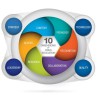 Hướng dẫn thực hành về Giáo dục Mở cho các học giả: Hiện đại hóa giáo dục đại học thông qua các thực hành Giáo dục Mở (dựa trên Khung OpenEdu)
 Chứng chỉ Creative Commons cho các nhà giáo dục, thủ thư hàn lâm, và văn hóa mở
 Các mô hình bền vững Tài nguyên Giáo dục Mở (TNGDM) - Tổng hợp
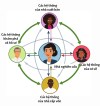 ORCID - Quy trình làm việc
 Tổng hợp các bài của Nhóm các Nhà cấp vốn Nghiên cứu Mở (ORFG) đã được dịch sang tiếng Việt
 Tổng hợp các bài của Liên minh S (cOAlition S) đã được dịch sang tiếng Việt
 Europeana - mô hình mẫu về hệ thống liên thông, Dữ liệu Mở (Liên kết) và dữ liệu FAIR của OpenGLAM/Văn hóa Mở
 Loạt bài về Khoa học Mở (KHM): Định nghĩa các khái niệm của KHM; Bộ công cụ KHM của UNESCO bản tiếng Việt; Năm KHM và chuyển đổi sang KHM;
 ‘ĐÁNH DẤU KHÓA HỌC MỞ VÀ KHAM ĐƯỢC: CÁC THỰC HÀNH TỐT NHẤT VÀ CÁC TRƯỜNG HỢP ĐIỂN HÌNH’ - VÀI THÔNG TIN HỮU ÍCH
 Khóa học cơ bản về Dữ liệu Mở trong chương trình học tập điện tử trên Cổng Dữ liệu châu Âu